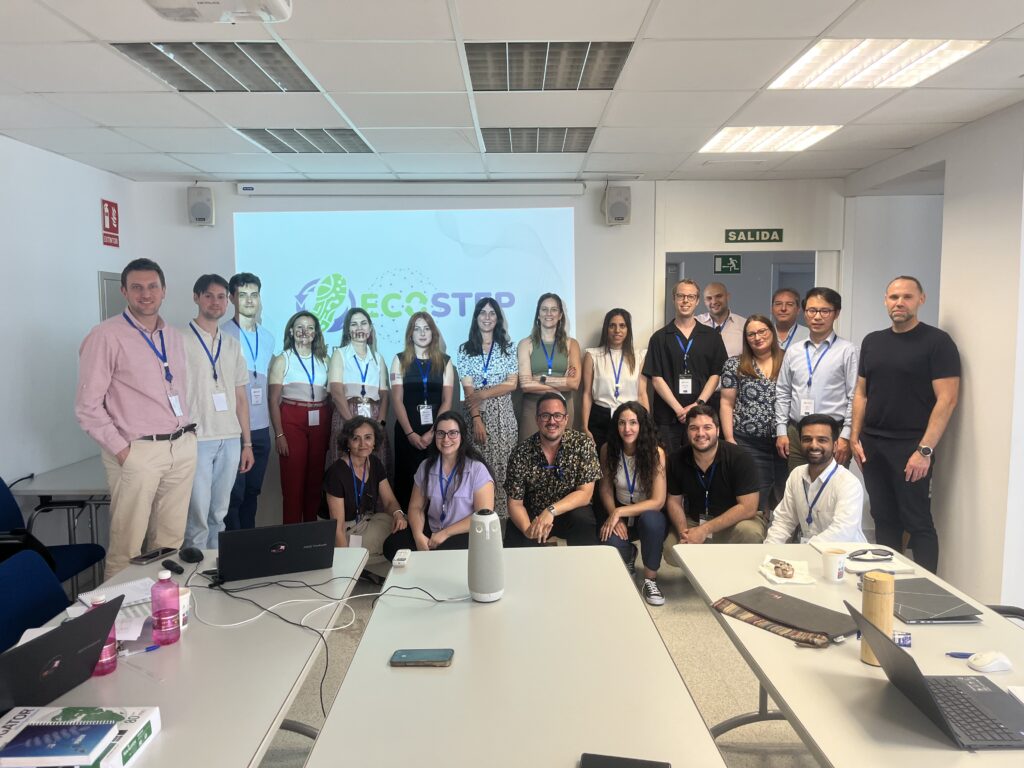
On 17 June 2026, the ECOSTEP consortium met in Murcia, Spain, for the project’s first Kick-off Meeting, bringing together the organisations that will work over the next four years to support the transition towards more sustainable, circular and transparent footwear in Europe.
Hosted by CETEC, coordinator of the project, the meeting welcomed around 30 participants in person at its facilities in Murcia, while approximately 10 additional participants joined remotely.
The full-day meeting represented the first major opportunity for the consortium to come together since the official start of ECOSTEP on 1 June 2026. More than a formal launch, the event was designed to establish a shared understanding of the project, introduce the expertise available across the consortium and coordinate the activities that will shape its first months.
ECOSTEP is a 48-month Horizon Europe Research and Innovation Action involving 10 partners from Spain, Germany, Belgium, Czechia, Bulgaria and Portugal.
From project launch to a shared roadmap
The start of a European research project involves much more than defining objectives on paper. Different organisations, technical disciplines and areas of expertise need to work towards the same goals, often across several countries and interconnected areas of activity.
That is where a Kick-off Meeting becomes particularly important.
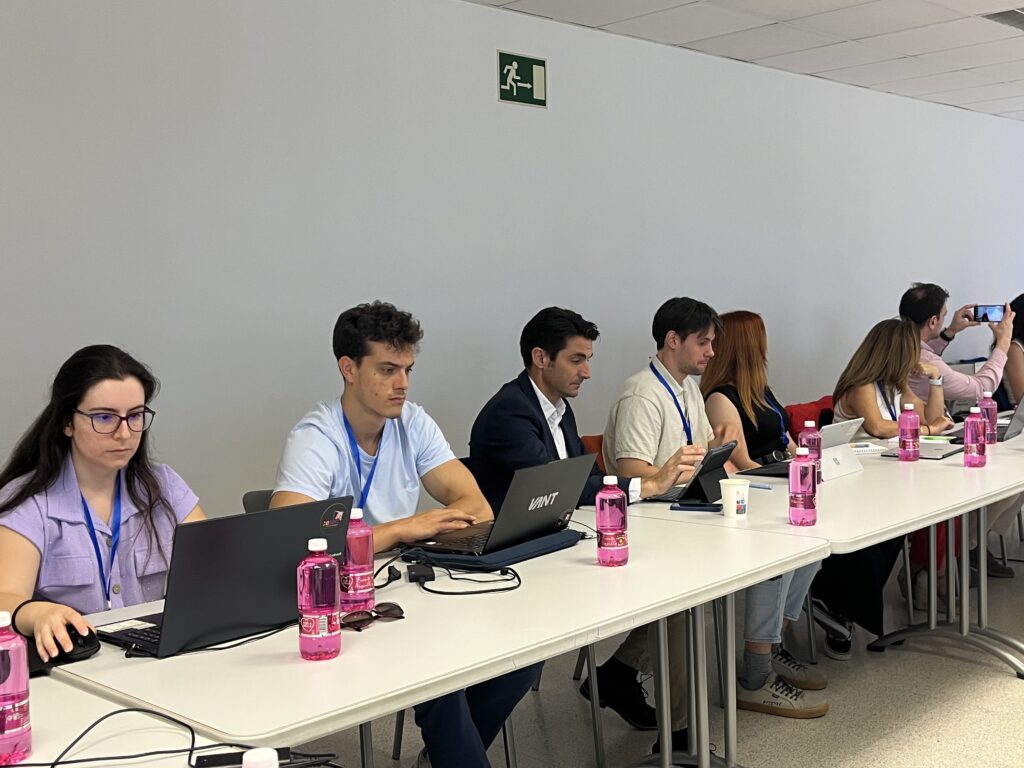
Throughout the day in Murcia, the ECOSTEP partners had the opportunity to introduce their organisations, present their main areas of expertise and explain how they will contribute to the project. These sessions helped participants understand not only who is involved in ECOSTEP, but also how the different capabilities represented within the consortium complement one another.
The consortium combines research and technology centres, universities, standardisation expertise, industry organisations, SMEs, consumer-focused organisations and specialists in communication and dissemination. This multidisciplinary structure is particularly relevant for a project addressing footwear sustainability, as improvements in the sector depend on more than one technology or area of expertise.
Design decisions, material performance, testing, sustainability assessment, digitalisation, regulation, consumer information and market uptake all need to be considered together.
Turning ECOSTEP’s objectives into coordinated action
A central part of the Kick-off Meeting focused on the project’s Work Packages, commonly referred to as WPs.
In European research projects, Work Packages organise the project into interconnected areas of activity, each with specific objectives, tasks, responsibilities and expected outcomes. During the meeting, partners presented the different WPs that will structure ECOSTEP and discussed how their activities will connect throughout the project.
These presentations were also an opportunity to move from the overall ambitions of ECOSTEP towards more concrete planning.
Partners discussed the activities expected during the first stages of implementation, the responsibilities of the different organisations and the coordination needed between technical and non-technical areas. Establishing these connections early is important because many of the project’s future results will depend on information, methods and expertise moving effectively between different WPs.
ECOSTEP aims to develop and validate an advanced ecodesign methodology specifically adapted to the footwear sector. Its work will bring together footwear-specific testing methods, Life Cycle Sustainability Assessment (LCSA), predictive modelling, AI-powered tools and Digital Product Passport functionalities, alongside training resources and practical tools for industry.
Life Cycle Sustainability Assessment expands the traditional life-cycle perspective by considering sustainability across different dimensions, helping projects and organisations better understand the implications associated with products and production decisions.
Bringing these different approaches together will require close coordination throughout ECOSTEP, making the alignment established during the Kick-off Meeting an important first step.
Why footwear needs an integrated approach to sustainability
The discussions in Murcia also reflected one of the central challenges behind ECOSTEP: footwear is a complex product.
A single pair of shoes can contain numerous materials, components and manufacturing processes. This makes characteristics such as durability, repairability, recyclability and overall sustainability difficult to assess through a single method or indicator.
At the same time, the footwear sector is adapting to an evolving European sustainability landscape in which product design, circularity, environmental information and transparency are becoming increasingly important.
ECOSTEP therefore approaches the challenge from several connected perspectives rather than focusing exclusively on one stage of the product lifecycle.
The project will explore how better ecodesign decisions can be supported by reliable testing, sustainability assessment and digital tools from the earliest stages of footwear development. It will also investigate how information can be made more useful and transparent through tools such as Digital Product Passport functionalities.
This integrated approach is central to the project’s broader ambition: making sustainable footwear easier to design, easier to evaluate and easier to trust.
Getting to know CETEC and its facilities
The Kick-off Meeting was not limited to presentations and planning sessions.
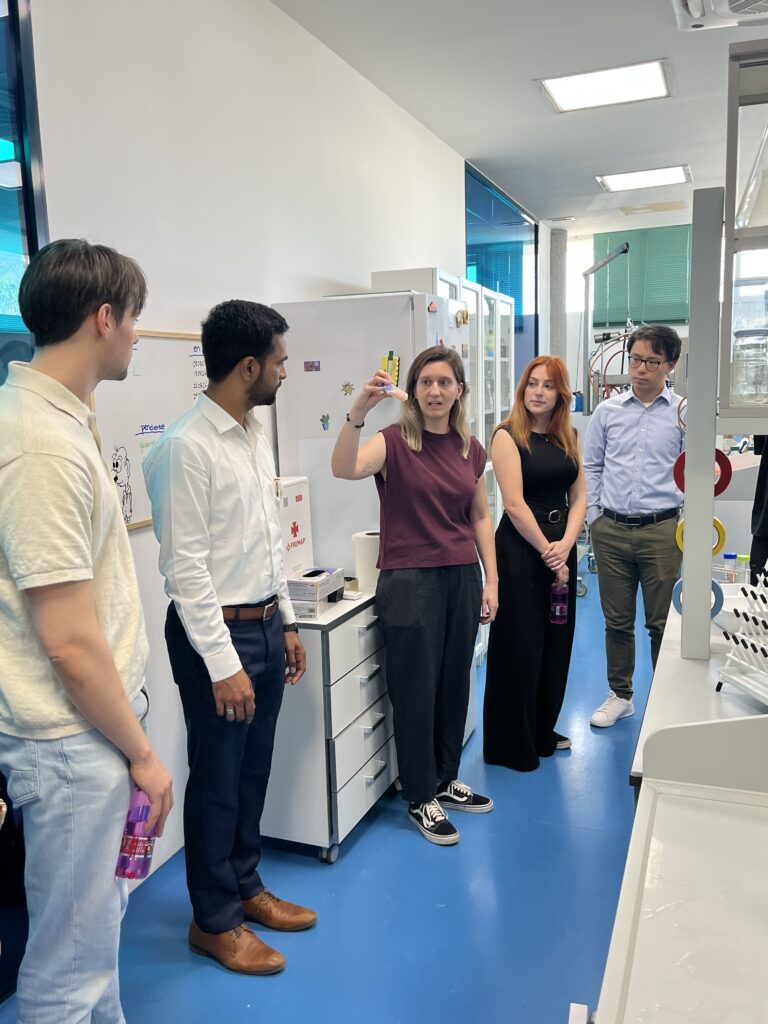
As host and coordinator of ECOSTEP, CETEC also welcomed consortium members for a visit to its facilities in Murcia. The visit gave participants the opportunity to learn more about the organisation, its activities and its working environment.
For partners joining the project from different countries and professional backgrounds, these moments provide valuable context. Understanding the expertise and capabilities available within the consortium can help identify opportunities for collaboration that are not always evident from project documentation alone.
The programme also included a joint lunch for all participants, creating a more informal setting for discussion and networking between partners.
Although the technical work of ECOSTEP will take place over four years, building strong working relationships from the beginning is an important part of making that collaboration effective.
The first steps towards ECOSTEP’s future results
With the Kick-off Meeting completed, attention now moves towards implementation.
During the coming months, the consortium will begin developing the methodologies, technical approaches and collaborative processes required for ECOSTEP’s future work. This will eventually contribute to results covering ecodesign, testing, digital tools, circular design, training, policy and standardisation.
The project is expected to generate five main result areas, including an ecodesign framework, an ECOSTEP digital platform, circular design guidelines, policy recommendations and a training programme.
These results are intended to support companies and other stakeholders in the footwear ecosystem as sustainability requirements become increasingly integrated into product development and business decision-making.
The Murcia meeting provided the common starting point for that process.
Four years of collaboration begin in Murcia
The ECOSTEP Kick-off Meeting marked an important transition: from a newly launched European project to a consortium beginning to work together towards shared objectives.
By bringing the partners together, establishing the links between Work Packages, discussing the first activities and learning more about the expertise available across the consortium, the meeting laid the foundations for the work ahead.
Over the next four years, ECOSTEP will work to translate research, testing, sustainability assessment and digital innovation into practical approaches that can contribute to more circular, durable and transparent footwear.
And the first step of that journey has now been taken in Murcia.
Follow the next steps of ECOSTEP
ECOSTEP will continue sharing updates on its activities, research, events and results as the project progresses.
Explore the ECOSTEP project, follow our latest news and connect with us on LinkedIn, BlueSky and YouTube to stay updated.